How multi-colour 3D printed figures are made without paint
How multi-colour 3D printed figures are made — part-by-part printing, filament changers, and why many figures are designed to snap together — and what it means for price, detail and colour choice.
On this page
A standard FDM printer has one nozzle and prints one spool of plastic at a time. So how does a figure come out with a red suit, a black belt and white eyes, with no paint at all? There are two ways, and the design decides which.
Method 1: print each colour as a separate part
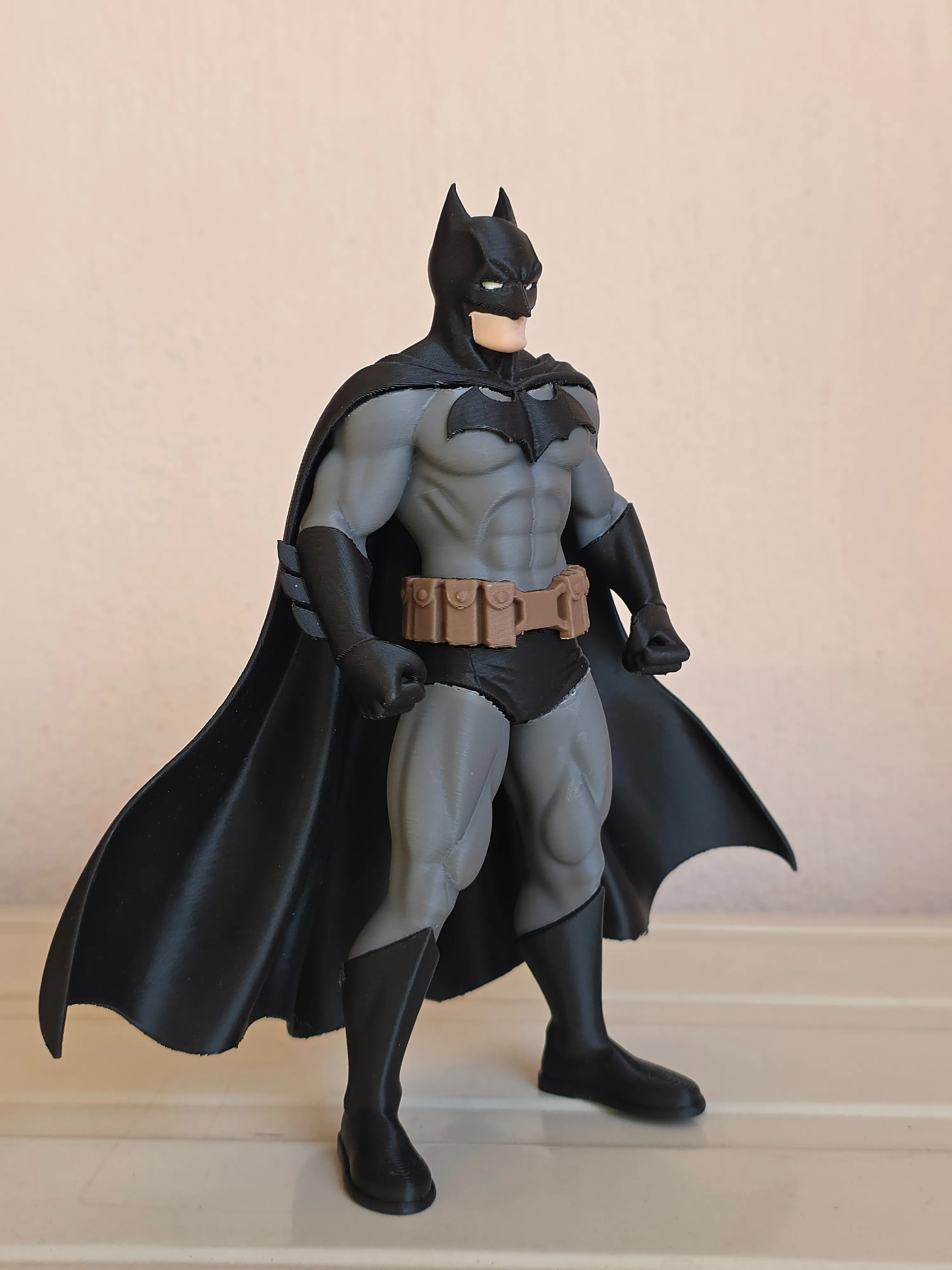
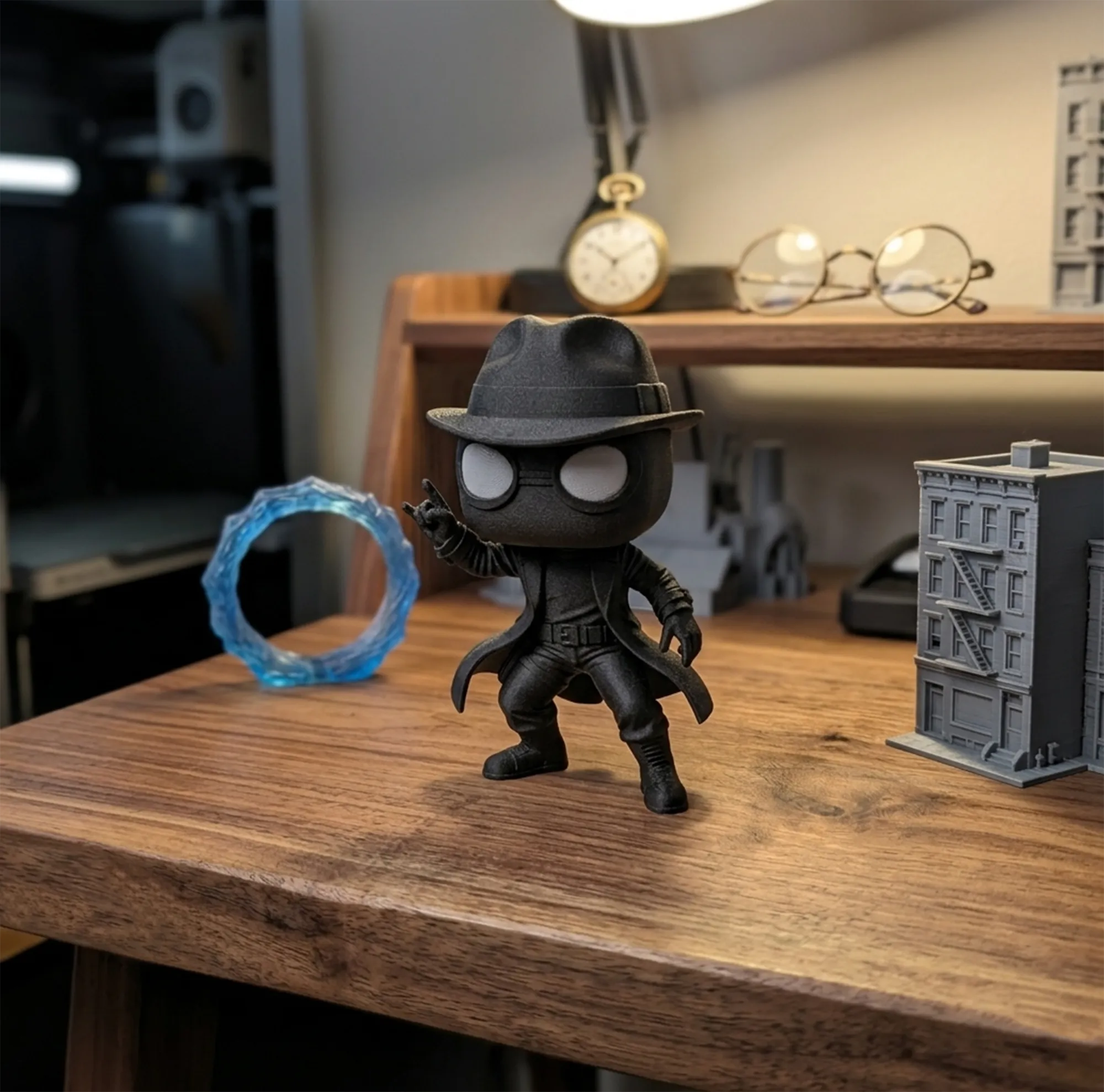
The most common approach for figures is to split the model into pieces by colour: head, body, cape, belt, eyes. Each piece is printed in its own colour, and the designer builds in pegs and sockets so the parts press together.
This is what MakerWorld designers mean by "No AMS": the figure needs no colour-changing hardware, only one spool per part. It has real advantages:
- Clean colour edges, because each colour is a separate part rather than a boundary inside one print.
- No wasted plastic from purging one colour to switch to the next.
- Stronger joins, because each part is printed in its best orientation.
The Noir Spider Chibi Figure and the Dark Knight Figure (Multi-colour) are made this way.
Method 2: switch colours during one print
Printers fitted with an automatic filament changer, such as an AMS unit, can swap spools partway through a print. The printer cuts the filament, loads the next colour, purges the old colour through the nozzle, and carries on.
It lets a single part carry several colours, like text on a sign. The costs are time and waste: each colour change takes around a minute and pushes out a little plastic. A figure with hundreds of colour changes can take much longer than printing the same colours as separate parts.
Why our multi-colour figures cost about the same
Part-by-part figures use roughly the same plastic as a single-colour print, just split across spools, and assembly takes minutes. So we price them like our other figures.
Can I change the colours?
Multi-colour figures print in the colours the designer chose, which is why the colour picker is replaced by a note on those product pages. For a different colour scheme, such as an all-black version or a character in new colours, ask us through the contact page. Single-colour figures are covered in our colour guide.
Frequently asked questions
Are multi-colour 3D printed figures painted?
No. The colours come from the plastic itself, either printed as separate parts that fit together or switched automatically during the print.
What does "No AMS" mean on a 3D model?
It means the model is designed to be printed in colour without an automatic material system: each colour is a separate part that is assembled after printing.
Are multi-colour figures glued together?
Usually they press-fit with pegs designed into the model. Some parts get a small drop of glue for a permanent hold.