Print-in-place and flexi figures — how 3D prints come off the printer already moving
How print-in-place and flexi 3D printed figures work, why their joints move with no assembly, how durable they are, and why they make good fidget toys and gifts.
On this page
Most printed figures are one solid piece, or several parts glued together. A print-in-place figure is different: it comes off the printer fully assembled, with joints that already move. No pins, no glue, no screwdriver.
How a joint can print already assembled
A printer builds an object one thin layer at a time. That means it can build a ball inside a socket, as long as the two never touch. The designer leaves a tiny gap, usually a fraction of a millimetre, between the moving parts. Each part is printed around the other, and when the print finishes, a gentle twist breaks any faint contact and the joint moves freely.
It is one of the things 3D printing can do that moulding cannot: an injection mould could never produce a pin trapped inside a hinge in a single shot.
Flexi figures
"Flexi" figures take the idea further, with a chain of print-in-place joints along the arms, legs and body so the whole figure poses and wiggles. Articulated dragons and animals made this way are some of the most popular prints on 3D model sites.
Our moving figures
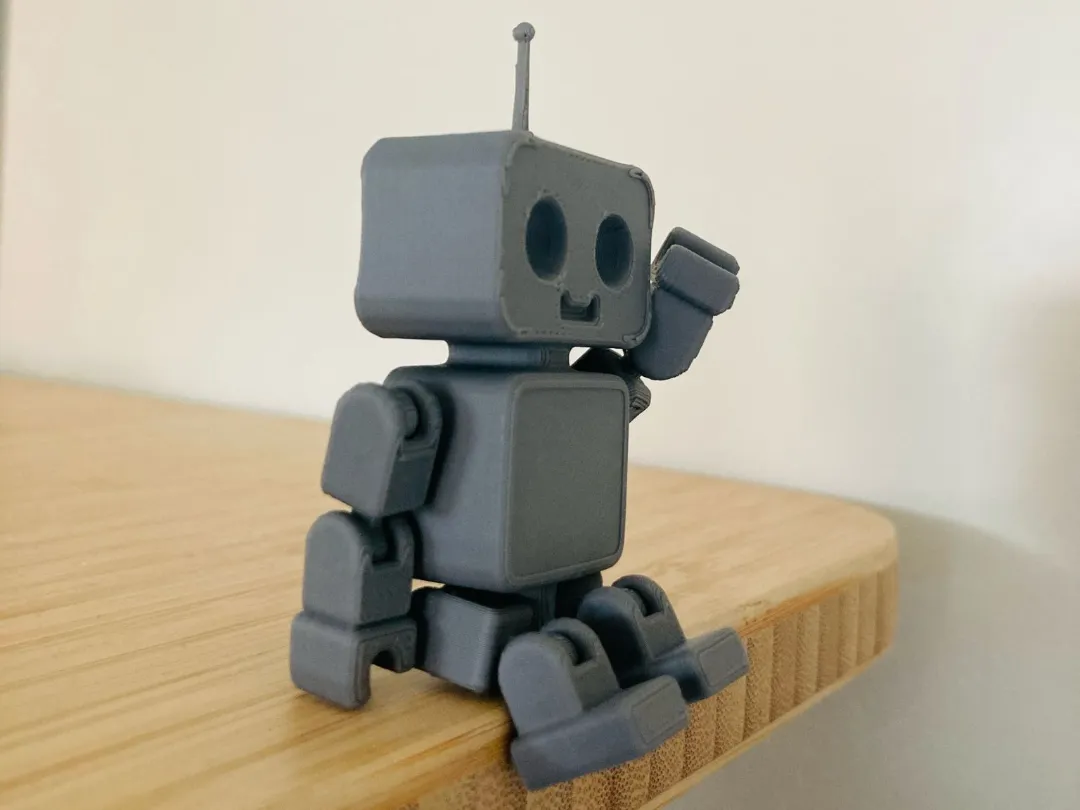
- [Articulated Robot (Print-in-Place)](/shop/articulated-robot): a cute robot whose arms, legs and head move straight off the printer. It is one of our quickest prints, at just over an hour.
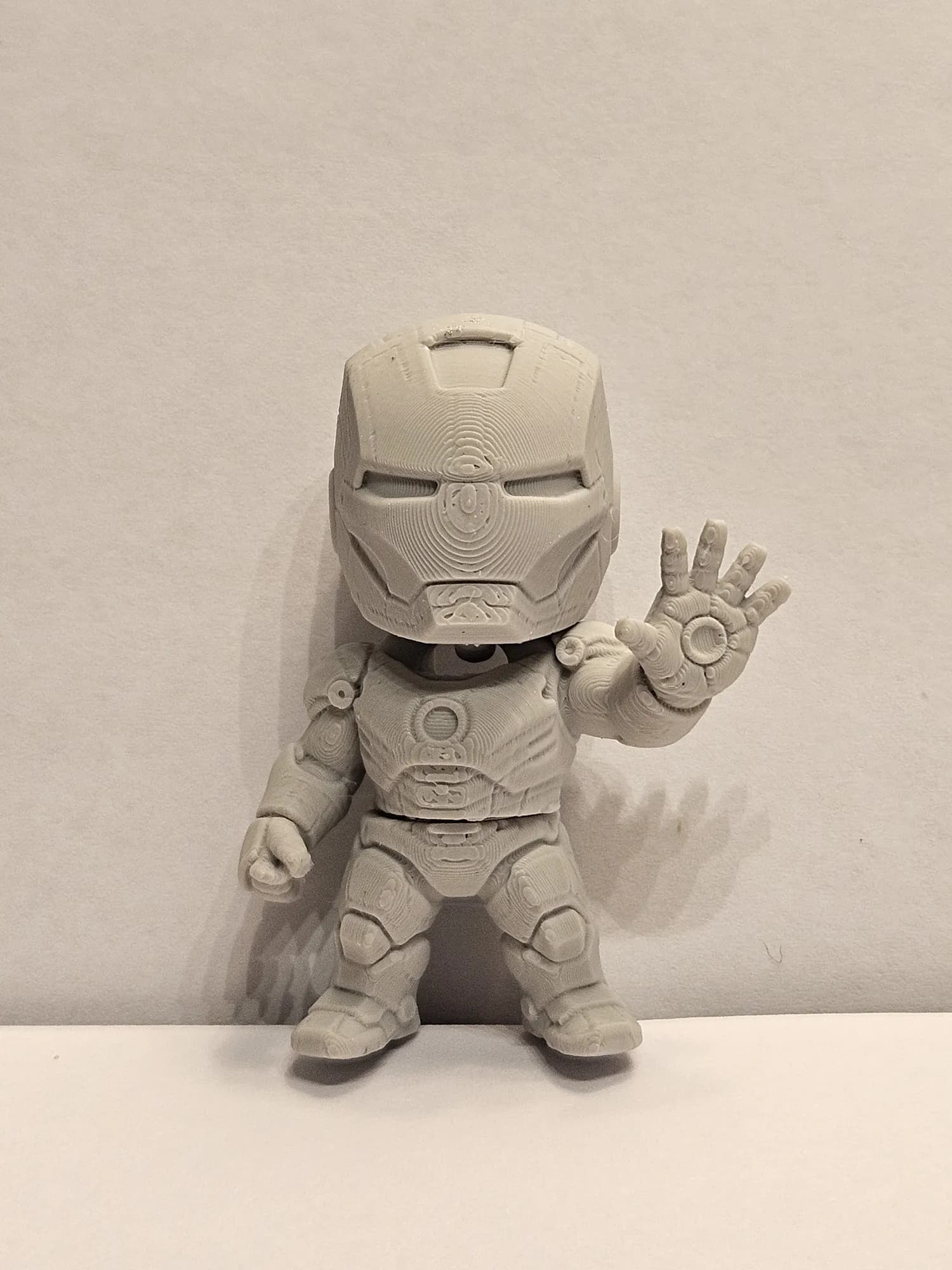
- [Mini Flexi Armour Figure](/shop/mini-armour): a tiny armoured hero with posable limbs, and our smallest piece at eight grams.
How durable are they?
Printed joints are surprisingly tough for everyday posing and fidgeting. The weak point is forcing a joint past its natural range. Move limbs the way they are designed to bend and they last. If a joint feels stiff when new, a few gentle movements free it up.
Why they make good gifts
They are something to do, not just something to look at. People fidget with them on calls and hand them round the office, which is why moving figures are a favourite for Secret Santa and office gifting.
Frequently asked questions
What does print-in-place mean?
It means an object with moving parts is printed fully assembled in one go, with small gaps designed between the parts so they move freely once printed.
Do print-in-place figures need assembly?
No. They come off the printer assembled. A few gentle movements loosen the joints on first use.
Can a print-in-place joint break?
It can if forced past its designed range of movement. Used normally, the joints are durable enough for everyday posing and fidgeting.